
T:
E:
Opening Times: 8am - 8pm
Is Lung Cancer Detectable Through Ultrasound?
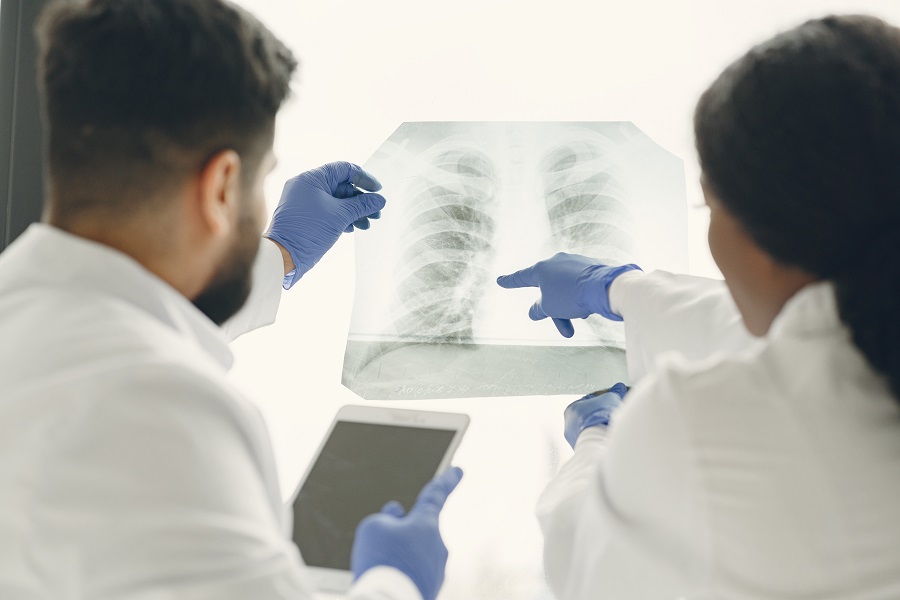
When someone faces the possibility of lung cancer, imaging tests quickly become part of the conversation. Patients often ask whether ultrasound, a familiar and widely used scan, can identify lung tumours. The answer is more nuanced than a simple yes or no.
This article explains where ultrasound fits in lung cancer detection, how it compares with other imaging tools, and what its role means within personalised treatment.
How Ultrasound Works in the Chest
Ultrasound (US) uses high-frequency sound waves to create images of structures inside the body. It works particularly well in organs filled with fluid or soft tissue, such as the liver, thyroid, or heart. The technology is safe, non-invasive, and does not involve radiation.
The lungs present a unique challenge. Healthy lung tissue is filled with air, and air disrupts the transmission of sound waves. As a result, this cannot clearly visualise structures deep within normally aerated lungs. Instead of detailed images, air causes reflection and scattering of sound waves, limiting the visibility of internal lung masses.
This physical limitation explains why this test is not considered a primary tool for detecting lung tumours located within the lung tissue itself.
Can Ultrasound Detect Lung Cancer Directly?
In most cases, ultrasound cannot directly detect lung cancer inside the lungs. Tumours that are surrounded by air-filled lung tissue are typically invisible on scans.
There are limited situations where the US may detect abnormalities:
- • Tumours near the chest wall that extend to the lung surface
- • Large masses causing fluid accumulation around the lungs
- • Enlarged lymph nodes in accessible areas, such as the neck
When a tumour grows close to the pleura (the lining around the lungs) or invades the chest wall, this procedure may identify a visible mass. However, this represents a minority of cases and usually occurs at a more advanced stage.
Because of these limitations, it is not used as a screening test for lung cancer.
Which Imaging Tests Detect Lung Cancer More Reliably?
When clinicians suspect lung cancer, they rely on imaging modalities capable of penetrating air-filled tissue.
The most common and effective tests include:
- • Chest X-ray – often the first imaging test performed
- • CT (Computed Tomography) scan – the primary diagnostic imaging tool
- • PET-CT scan – used to assess metabolic activity and staging
CT scans provide detailed cross-sectional images of the lungs and can detect small nodules that ultrasound would miss. Low-dose CT is also used in screening high-risk individuals, such as long-term smokers.
Understanding what is lung cancer involves recognising that it develops from abnormal cell growth within lung tissue, often forming nodules or masses deep inside the air-filled lung. These characteristics explain why cross-sectional imaging, such as CT, is essential for detection.
US simply cannot replace these technologies when evaluating suspected primary lung tumours.
The Role of Ultrasound in Diagnosing and Staging
Although it is not suitable for primary detection, it plays a supportive role in diagnosis and staging.
Guiding Biopsies
Ultrasound is frequently used to guide needle biopsies of:
- • Superficial lymph nodes
- • Chest wall lesions
- • Fluid collections
If a patient has enlarged lymph nodes above the collarbone, US can help target a biopsy accurately and safely.
Assessing Pleural Effusion
Lung cancer may cause fluid to accumulate between the lung and chest wall, known as a pleural effusion. Ultrasound is highly effective in identifying and characterising this fluid. It also guides safe drainage procedures (thoracentesis), which may provide diagnostic samples.
Endobronchial Ultrasound (EBUS)
A specialised technique called endobronchial ultrasound combines bronchoscopy with ultrasound imaging. A small US probe is inserted through the airways to assess lymph nodes within the chest. This method allows doctors to sample mediastinal lymph nodes without open surgery and plays an important role in staging confirmed lung cancer.
When Might a Doctor Use Ultrasound in Suspected Lung Cancer?
Evaluation of Neck Lymph Nodes
If physical examination reveals enlarged lymph nodes in the neck or above the collarbone, ultrasound offers a quick, radiation-free assessment. Suspicious nodes can be sampled immediately under guidance.
Monitoring Complications
Patients with established lung cancer may develop:
- • Pleural effusions
- • Pericardial effusions
- • Chest wall involvement
Ultrasound helps monitor and manage these complications efficiently.
Patients Unsuitable for CT Contrast
In individuals who cannot receive intravenous contrast due to kidney impairment or allergy, US may help evaluate certain accessible structures. Still, it remains a supplementary tool rather than a replacement for CT.
Clinical Limitations and Why It Is Not a Screening Tool
Screening tests must reliably detect disease at an early, treatable stage. Ultrasound does not meet this standard for lung cancer because:
- • Air blocks adequate visualisation of lung tissue
- • Small nodules are not detectable
- • Deep central tumours remain hidden
- • It cannot provide comprehensive staging information
Low-dose CT scanning has demonstrated effectiveness in reducing mortality among high-risk populations. No comparable evidence supports ultrasound as a screening method for lung cancer.
This distinction is important for patients who may assume that because ultrasound works well in other cancers, it would apply equally to the lungs.
Conclusion
Ultrasound is not a primary method for detecting lung cancer because air-filled lung tissue limits sound wave transmission. Its role lies in supporting procedures, assessing fluid collections, and guiding biopsies when appropriate. Accurate diagnosis typically relies on CT imaging and tissue analysis, which allow both structural assessment and molecular profiling. In modern oncology, diagnostic strategies are increasingly personalised, integrating imaging findings with biological data to guide precise and evidence-based treatment decisions.
Your login details have been used by another user or machine. Login details can only be used once at any one time so you have therefore automatically been logged out. Please contact your sites administrator if you believe this other user or machine has unauthorised access.